


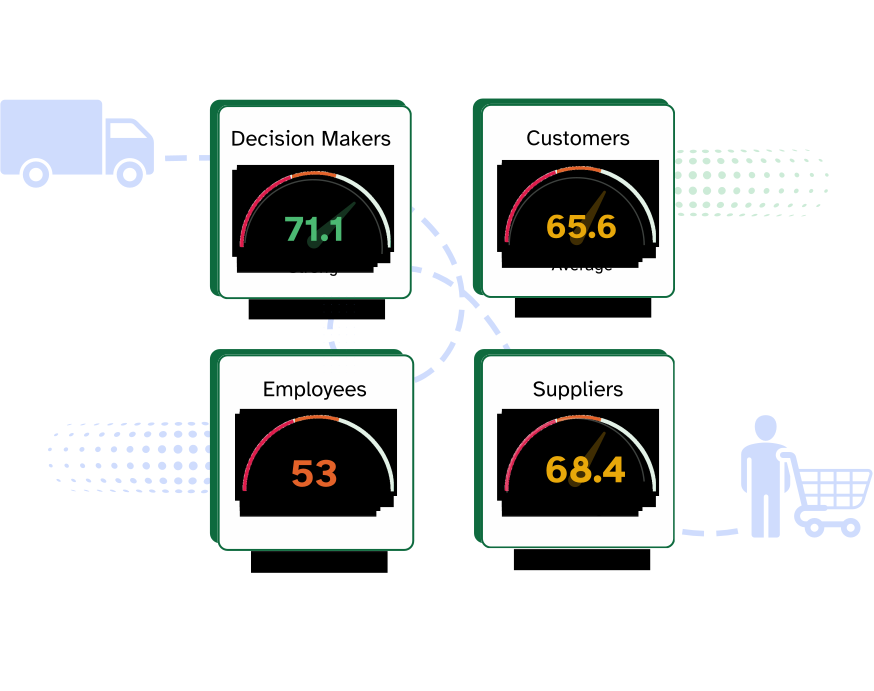
When You Have A Single Reputation Score, It’s Hiding A Lot
Many organizations believe they are managing stakeholders. What they are actually managing, in many cases, is averages.
Reputation Intelligence for the Food and Beverage Industry
RepTrak provides Food and Beverage companies with the insights needed to manage multi-brand reputations, navigate M&A impacts, and align with evolving consumer demands for health and sustainability.
As consumers push for healthier and more sustainable products, Food & Beverage brands face the challenge of adapting without losing their core identity. Mergers and acquisitions offer growth opportunities but also carry significant reputational risks. In an industry driven by trust, even a small misstep can impact customer loyalty, investor confidence, and long-term success.

RepTrak empowers Food & Beverage companies with industry experts and advanced analytics to identify risks and develop strategies that align with your corporate goals. Whether navigating mergers, adapting to evolving consumer trends, or leading in health and sustainability, RepTrak equips you with the insights and support needed for long-term success.

Recommendations from experts who understand the nuances of the Food & Beverage industry across global markets.

Scientifically validated approach, fine-tuned for Food & Beverage, providing insights you can act on with confidence.

Leverage millions of global data points and learn from leaders who’ve transformed their reputation.
BUILT FOR DATA DRIVEN COMMUNICATIONS TEAMS
Gain a complete view of how consumers, suppliers, employees, and investors perceive your brands so you can tailor your strategy effectively.
Food and Beverage companies are more than just a brand. They are a trusted part of consumers' daily lives. Their products are present at the dinner table, in local markets, and at community events. But as regulations tighten and consumer needs evolve, the industry is expected to act with transparency, accountability, and a commitment to consumer well-being.
RepTrak is here to help manage those changes with an exclusive guide for Food and Beverage companies. Fill out the form to access actionable strategies that will help your company build long-term reputational success, earn stakeholder trust, and stand out in an increasingly consumer-conscious market.
Fill out the form
Download the guide here
STAY UPDATED
Many organizations believe they are managing stakeholders. What they are actually managing, in many cases, is averages.
Against a backdrop of mixed public sentiment on AI, a number of companies are beginning to reframe their core product experiences around innately human elements. RepTrak data shows why this trend is likely to accelerate—and points to what you should be tracking.
The consumer health and pharma reputation landscape has shifted structurally since the COVID peak, and not in ways that more communications activity alone will fix. Here's what's facing new comms leaders in the space.
Most comms teams are watching the wrong things during viral moments (they're reacting to volume when they should be diagnosing Reputation driver exposure). We put together a framework for doing exactly that — using RepTrak Compass to move from reactive narrative control to structured reputation diagnosis.
Most comms teams are watching the wrong things during viral moments (they're reacting to volume when they should be diagnosing Reputation driver exposure). We put together a framework for doing exactly that — using RepTrak Compass to move from reactive narrative control to structured reputation diagnosis.
Stakeholders are paying closer attention to leadership visibility than they have in years. 48% say the CEO is the most appropriate voice to communicate company vision.
RepTrak's latest Current Events data shows that between Q4 2024 and Q4 2025, trust increased across both groups, but influencers moved faster, especially in digital channels like online advertising, owned social media, and social media news.
When stakeholders navigate economic complexity—personal optimism, national pessimism—they seek validation from multiple sources. Your channel strategy needs to adjust accordingly.
AI tools have a trust problem—just not the one you think. Our latest data shows AI as a communications channel is nearly as trustworthy as traditional news. But it's far less desirable. And the reason for that is trust in AI as a technology.
Explore how reputation leaders can move from AI integration to advantage in 2026 — using AI to shape perception, build trust, and drive long-term value.
Many organizations believe they are managing stakeholders. What they are actually managing, in many cases, is averages.
Against a backdrop of mixed public sentiment on AI, a number of companies are beginning to reframe their core product experiences around innately human elements. RepTrak data shows why this trend is likely to accelerate—and points to what you should be tracking.
The consumer health and pharma reputation landscape has shifted structurally since the COVID peak, and not in ways that more communications activity alone will fix. Here's what's facing new comms leaders in the space.
Most comms teams are watching the wrong things during viral moments (they're reacting to volume when they should be diagnosing Reputation driver exposure). We put together a framework for doing exactly that — using RepTrak Compass to move from reactive narrative control to structured reputation diagnosis.
Most comms teams are watching the wrong things during viral moments (they're reacting to volume when they should be diagnosing Reputation driver exposure). We put together a framework for doing exactly that — using RepTrak Compass to move from reactive narrative control to structured reputation diagnosis.
Stakeholders are paying closer attention to leadership visibility than they have in years. 48% say the CEO is the most appropriate voice to communicate company vision.
RepTrak's latest Current Events data shows that between Q4 2024 and Q4 2025, trust increased across both groups, but influencers moved faster, especially in digital channels like online advertising, owned social media, and social media news.
When stakeholders navigate economic complexity—personal optimism, national pessimism—they seek validation from multiple sources. Your channel strategy needs to adjust accordingly.
AI tools have a trust problem—just not the one you think. Our latest data shows AI as a communications channel is nearly as trustworthy as traditional news. But it's far less desirable. And the reason for that is trust in AI as a technology.
Explore how reputation leaders can move from AI integration to advantage in 2026 — using AI to shape perception, build trust, and drive long-term value.


